

Brussels finds itself once again confronted with its familiar contradiction and the syndrome of... megalomania of a former great power which no one considers seriously: they seek to function as a geopolitical power with increased common spending, without, however, any agreement existing on who will ultimately shoulder the cost.
At the center of the discussion was the proposal of Spain, which was presented at the meeting of the Eurogroup in Brussels, for the creation of a European mechanism that will be able to issue up to 850 billion euros of common debt annually.
The initiative of the Spanish Minister of Economy Carlos Cuerpo provides for the creation of a "European Sovereign Debt Mechanism", through which the European Commission will undertake the issuance of part of the borrowing of the member-states.
Subsequently, the Commission will issue European bonds and channel the funds to the states in the form of loans.
According to Spanish calculations, if all member-states participate, the mechanism could create within five years a common European debt market of approximately 5 trillion euros, a size which Madrid considers necessary for the creation of a truly safe European asset in euros.
At the same time, it is estimated that European governments could save up to 25 billion euros annually in interest.
It should be noted, in order to perceive the proportions, that this was the amount that Mario Draghi activated for the protection of Europe from the consequences of the financial crisis with his famous statement that "he would do whatever it takes".
The Spanish government argues that the proposal does not increase the total public debt of the European Union, but simply reorganizes the way of its issuance.

The new architecture... through drift
However, the political dimension is clear: it is one thing for each state to be accountable on its own to the markets for its public debt and another thing to create a permanent architecture of common European borrowing, which will ultimately be backed by the European budget and, by extension, by European taxpayers.
The proposal caused immediate reservations from some of the largest economies of the European Union – which, however, have to face thorny budget issues, but also the way of financing defense spending from which they will benefit with "golden contracts", see Germany and France.
So, necessarily and out of things, they will be dragged toward there through... drift because no government - neither the French nor the German - can politically defend common borrowing, which also does not have a multitude of... supporters in the large economies.
The euro, the dollar and the assets in the European currency
During the meeting of the Finance Ministers of the Eurozone, Germany and, to a lesser extent, France were among the countries that questioned the plan for the centralized management of part of national borrowing, according to sources familiar with the discussions.
The proposal was examined in the context of the effort to reinforce the international role of the euro as a reserve currency.
Many economists and European officials estimate that the creation of a large and deep market of common European bonds could significantly increase the attractiveness of the euro in international markets.
However, several countries remain opposed, arguing that the common assumption of debt may weaken the incentives for fiscal discipline and create the so-called "moral hazard", namely the tendency of certain governments to increase their borrowing knowing that the burden will be shared at a European level.
According to information from Bloomberg, during the closed-door talks, Germany, the Netherlands, and Finland argued that priority should be the reinforcement of the fundamentals of the European economy and not the creation of new mechanisms of common borrowing.
France and Austria also focused their reservations on the risk of relaxation of fiscal discipline.
A spokesperson for the Austrian Ministry of Finance characterized the proposal as interesting, noting that Vienna views the issuance of common debt positively when it finances European public goods, he underlined however that important open issues remain.
The Finance Ministers of Finland and the Netherlands had already publicly rejected the prospect of additional common borrowing before the meeting, while among the countries that took a position, only Portugal expressed clear support for the Spanish plan.


The juncture and the European budget
The timing is not considered accidental.
Berlin has already rejected the prospect of increasing the Multiannual Financial Framework (MFF) for the period 2028-2034 and demands cuts of approximately 400 billion euros in a proposal by the European Commission that approaches 2 trillion euros.
Germany, as the largest net contributor to the community budget, considers that the size of the next European budget is excessive and has signaled that there will hardly be an agreement if current spending levels are maintained.
If the community budget hits the objections of Berlin, several estimate that Brussels will seek alternative sources of financing through the issuance of common debt.
Such a solution is presented as a tool for the reinforcement of the strategic autonomy of Europe and the international role of the euro, without appearing as a direct increase in community spending.
Where the funds could be directed
Although the Spanish proposal does not officially link the new mechanism with specific expenditures, the broader geopolitical environment points to the financing of European defense, the support toward Ukraine, the military industry, critical infrastructure, cyber-security, and the industrial adaptation related to the rearmament of Europe.
NATO is at the same time intensifying pressures toward member-states for a significant increase in defense spending, with the goal to approach 5% of GDP by 2035, while the economic and military support toward Ukraine continues.

Lagarde: Europe needs a safe European asset
The President of the European Central Bank, Christine Lagarde, stated that it is "quite obvious" that the European Union needs a European safe asset capable of competing with American treasury bonds.
She also welcomed the fact that Spain submitted a specific proposal for discussion, calling on member-states to examine which elements they can support and which need modifications.
The President of the Eurogroup, Kyriakos Pierrakakis, stated that the proposal will be examined further and that the relevant consultations will continue at a technical level.
From his side, European Commissioner Valdis Dombrovskis reminded that the discussion about common European debt is not new, but acquires a new dynamic in the context of the negotiations for the next seven-year budget of the European Union.
The French Minister of Finance, Roland Lescure, characterized the Spanish proposal as interesting, warned however that it could create incentives for greater borrowing by certain states, given that the debt will be shared among the whole of the European Union.
Despite reservations, he stressed that the euro must become stronger, deeper, and more liquid in international financial markets.
If a mechanism for issuing up to 850 billion euros of common debt annually is finally implemented, it will not be just a technical change in the way Europe borrows.
It will signal a substantial alteration in the fiscal architecture of the European Union, transferring a significant part of fiscal sovereignty from the member-states to a European level.
The increase in defense spending constitutes now a one-way street for Europe, but the real question is not only how much it will cost, but whether it can boost growth without derailing public debt.
The ESM report – The defense industry will give a boost to the productive model
In its latest report ("Euro Area Stability Watch 2026", June 2026), the European Stability Mechanism (ESM) argues that the economic impact of the new armaments cycle is not predetermined.
If investments are designed correctly, they can return to the economy a significant part of the fiscal cost, through higher productivity, greater growth, and increased tax revenues.
In a special chapter, the ESM examines the cost of European defense reinforcement in a period during which eurozone countries are called to increase their military spending toward the new NATO goal, amounting to 3.5% of GDP.
For the eurozone, this translates into additional expenditures of approximately 45 billion euros annually until 2035, at a time when many economies continue to face high public debt and limited fiscal margins.
The composition of spending
The basic finding of the ESM is that Europe lags behind not only in the amount of defense spending, but mainly in the way it allocates it.
Today, over 40% of the total defense budget of the European Union is directed to personnel salaries, approximately one-third concerns goods and services, while barely 20% concerns investments.
Even more characteristic is that research and development (R&D) absorbs barely 3% of total defense spending, when in the United States the corresponding percentage reaches 12%.
According to the ESM, this chronic underinvestment in innovation maintains Europe's dependence on non-European suppliers in critical technologies and limits the benefits that could diffuse into the rest of the economy.
The productivity
The report presents new data for more than 1,300 defense enterprises and approximately 1.2 million non-defense enterprises in the four largest economies of the eurozone (Germany, France, Italy, and Spain).
The analysis shows that defense enterprises display:
1) approximately 40% higher total factor productivity (TFP),
2) 35% greater investment intensity,
3) higher capital intensity, higher wages than corresponding enterprises of the civil economy.
Although the sector represents barely 1.9% of the total turnover of the economy (and approximately 4.5% of manufacturing), it constitutes one of the most technologically advanced sectors of European industry.
The ESM points out that the greatest economic benefit does not originate from the final production of weapon systems, but from the network of enterprises supporting them.
According to the report, 85% of the intermediate inputs used by the European defense industry originates from enterprises of the eurozone itself. This means that every large defense order activates an extensive network of suppliers, who invest in new equipment, technologies, and production processes.
The study calculates that an increase by 10% in the intensity of defense investments leads to an increase of approximately 0.08% in the productivity (TFP) of suppliers, with the greatest benefits appearing in enterprises that are already close to the technological frontier.
These diffusions originate both from investments in capital equipment and from expenditures for research and development.

How the fiscal cost is reduced
The basic finding of the report is that defense spending can partly finance itself.
In the baseline scenario of the ESM, a permanent increase in defense spending by 1.5 percentage points of GDP is examined, which is applied gradually within ten years.
Of this, one-third concerns personnel and two-thirds concern investments and equipment procurement, while initially it is financed through borrowing and subsequently the debt returns to initial levels through reallocation of spending and not through tax increases.
The results show that:
1) without productive diffusions, the state recovers approximately 25 cents for every additional euro of defense spending through higher economic activity and tax revenues,
2) with strong productivity diffusions, the recovery increases to 53 cents per euro, reducing the net fiscal cost from 1 euro to 47 cents.
The most important mechanism of this recovery is the increase in employment and wages.
According to the report, approximately 40 percentage points from the total self-financing rate (53%) originate from the increase in labor incomes, which broaden the tax base.
Debt remains the great danger
Despite the developmental benefits, the ESMが見 warns that the burden on public debt remains real.
If the increase in defense spending is accompanied by permanently higher public debt, real interest rates increase, private investments are restricted, and a larger part of public resources is directed to the servicing of the debt.
On the contrary, when governments accompany defense reinforcement with a reliable medium-term plan of fiscal adjustment, the cost of borrowing remains lower and a larger part of the developmental benefit is maintained.
Equally important is the method of financing. The report considers the reallocation of existing expenditures preferable over an increase in taxation, as the burden primarily on labor reduces employment, restricts growth, and can vanish a large part of the fiscal benefit.

The golden deals of Ankara
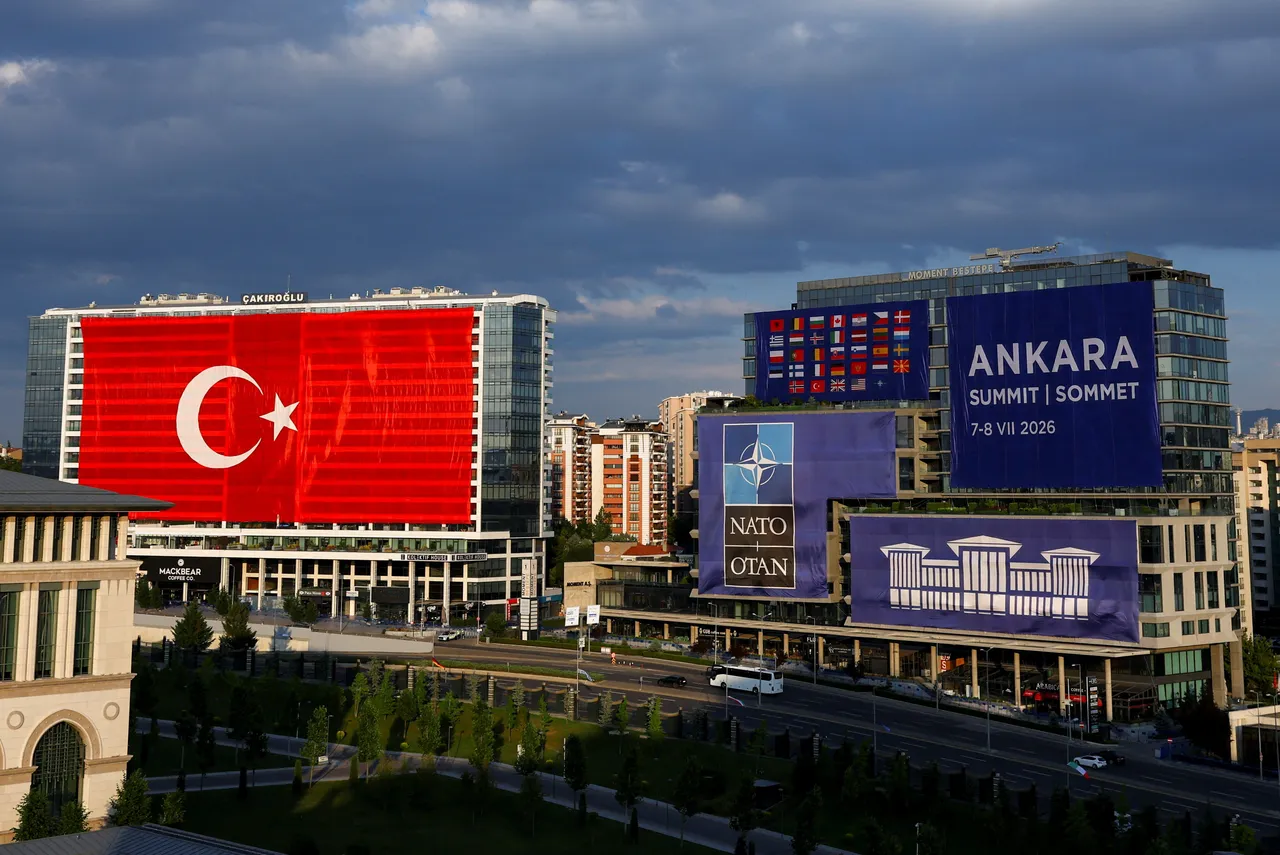
Some of the initiatives presented by General Secretary of NATO Mark Rutte at the recent NATO summit in Ankara included large contracts with American companies, however many others did not concern American suppliers, the Financial Times note.
One of the largest agreements concerns the procurement of up to ten surveillance aircraft from a consortium led by the Swedish Saab and the Canadian Bombardier.
The GlobalEye aircraft, with a cost between 400 and 450 million dollars each, will replace the fleet of 14 airborne early warning and control aircraft AWACS currently possessed by NATO.
The President of Saab, Mikael Johansson, stated that the aircraft, early versions of which are already in service, could be delivered from 2030, provided the agreement is finalized soon.
At the same time, Rutte announced that the allies will procure up to five high-altitude surveillance unmanned aerial vehicles MQ-4C Triton of Northrop Grumman.
Norway, Finland, Germany, and Denmark signed a letter of intent for the purchase of these specific drones, which, according to recent procurement data of the American Department of Defense, cost approximately 270 million dollars each.
"We need a transatlantic revolution in the defense industry. The hum of industrial engines must turn into a roar," stated Rutte. "The money is there and even more will follow. But these funds must be utilized... The security situation dictates it."
These impressive agreements in the sector of the defense industry follow the visit of Rutte to Washington late last month, with the goal to appease American anxieties that the defense spending of certain European countries and Canada falls short of their commitments.
The... Trump trillion
Rutte presented to the President of the USA a chart under the title "The Trump Trillion", according to which European allies and Canada have increased their defense spending by 1.2 trillion dollars since 2017.
However, Donald Trump appeared not to be impressed by the presentation of Rutte, stating that he was disappointed by the refusal of certain allies of NATO to participate in the war with Iran. "We don't need their money," he said. "All I want is loyalty."
In view of the NATO summit, a senior American official stated that Trump "has already foreshadowed how he evaluates the insufficient fulfillment of defense commitments by our allies and will convey this message in person."
He added that the allies of NATO "must reinforce their capabilities" and "proceed as fast as possible to the implementation of the Hague commitment for defense."
The Hague commitment provides for defense spending equal to 5% of GDP until 2035. Rutte stated on Monday that the summit will require from allies to present "clear, specific, and reliable plans" for the achievement of this goal.
He also warned that if there are still countries that need persuasion, "we possess ways to achieve it," without giving further clarifications.
Beyond the effort to reassure Trump, a senior European official stated that the abundance of defense agreements also aims at "promoting the reinforcement of our defense capabilities, serving interoperability among allies, and overall reinforcing our deterrent power against anyone who might attempt to attack us."
However, some of the agreements also highlighted the difficulties faced by NATO in its effort to develop transatlantic co-production of new weapon systems.
Rheinmetall, Lockheed Martin and the Patriots
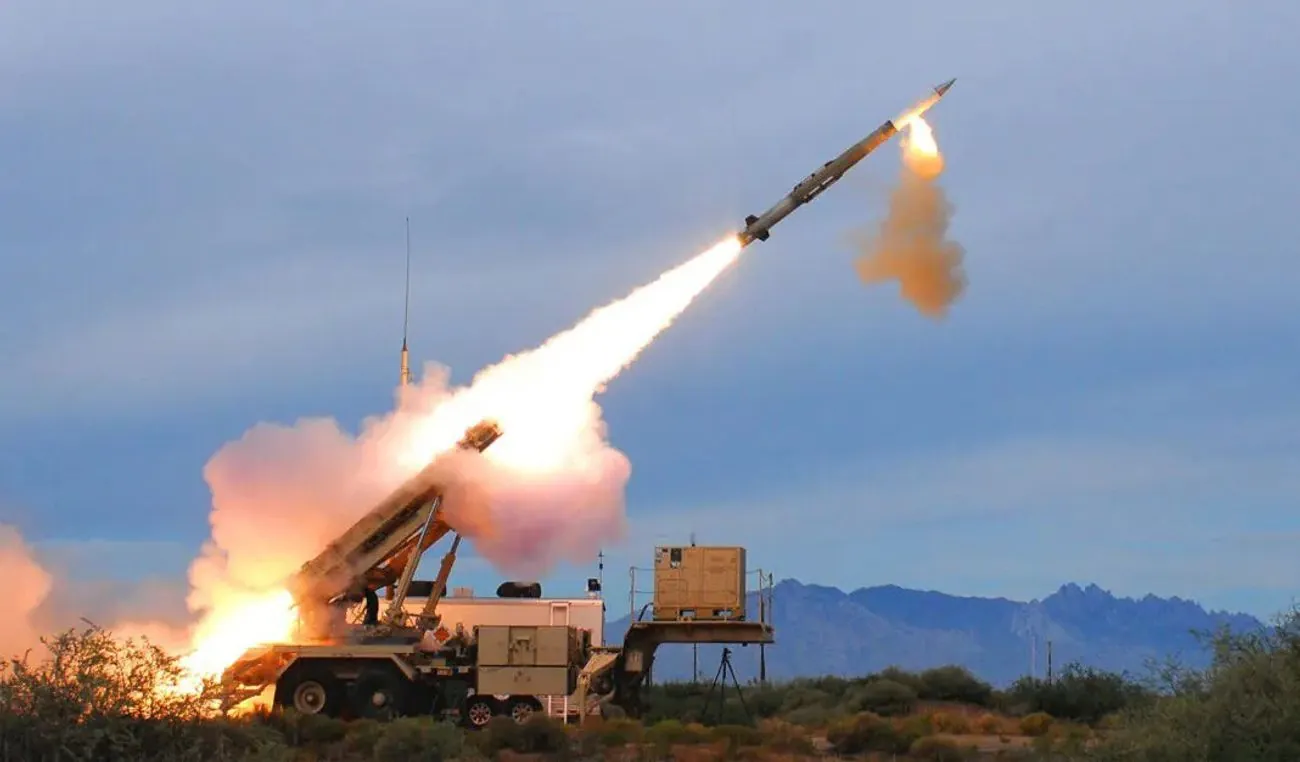
The German defense industry Rheinmetall and the American giant Lockheed Martin announced progress in their plan for the production of missiles and missile systems in Germany.
After months of negotiations, however, this development falls significantly short of the expectations expressed more than a year ago by the CEO of Rheinmetall, Armin Papperger, among which was included the production, under license, of PAC-3 interceptor missiles for Patriot air defense systems, which have proven of critical importance for the protection of Ukrainian cities from attacks by Russian ballistic missiles.
Instead, the two companies announced progress only in the production of a less technologically advanced weapon system, the ATACMS missiles, which the USA are gradually phasing out, replacing them with a newer and technologically superior system.
A separate announcement revealed plans for the creation of a special maintenance facility for PAC-3 missiles on European soil. However, the coveted goal of producing PAC-3 interceptor missiles in Europe under American license remains elusive.
Instead of a clear commitment, the US Assistant Secretary of Defense, Michael Duffy, stated to journalists: "We remain open to the possibility of production outside the United States."
The conclusion is that the economy of Europe is being converted into a war economy...
Guns, instead of butter according to an old slogan.. based on a manufactured enemy and to the detriment of the interests of its peoples.
www.bankingnews.gr







Σχόλια αναγνωστών